
Meet the team: Q&A with Kimberley Grimsted, Owner
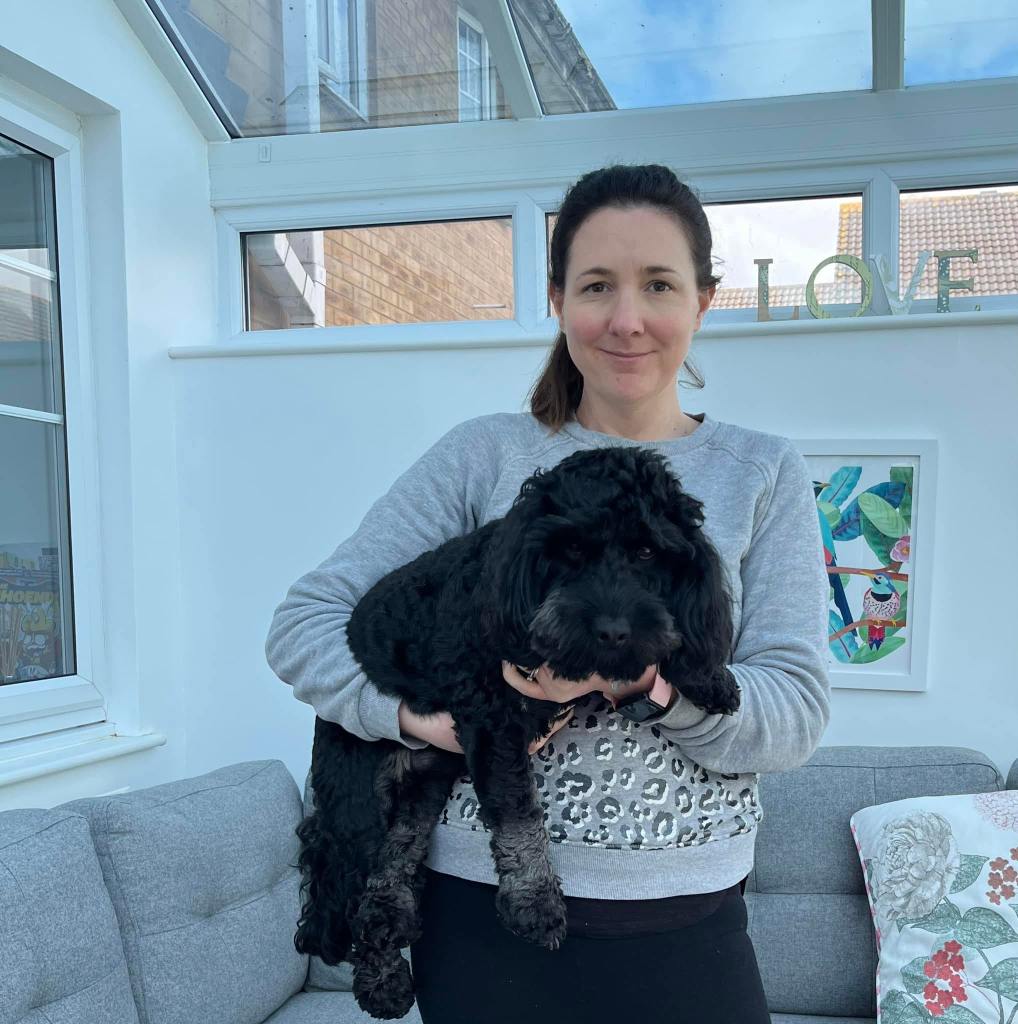
Kimberley is a games based concept trainer located in North Somerset, England. With clients across the UK and further afield all the way to New Zealand, Kimberley’s training is offered online, and in-person through 1-2-1 sessions or small groups. She has grown up with dogs, horses and even guinea pigs! With a degree in Psychology from Cardiff University, Kimberley has always been fascinated by how the brain – both human and animal, can shape behaviors.

What is games based dog training?
There are three types of dog training and trainer. Games based concept training is where I, the trainer, work with you to reshape your dogs brain to provide them with the tools they need to cope with the everyday situations they may encounter. This is through concepts that are taught such as calmness, impulse-control, boundaries, focus and optimism.
The other types of dog training are:
- Aversion and intimidation based training – this type of training uses force and can create a negative relationship with yourself and your dog. This ultimately causes your dogs behaviour to worsen.
- Reward based training – this type of training uses food and/or toys to repeatedly reward the dog. This is an ineffective method due to the focus on behaviour rather than what’s behind the behaviour.
How are you different to other trainers?
Some of my clients have been told by previous dog trainers that there isn’t any hope for their dog, I just don’t believe that is the case. No relationship is ever lost and by looking at dog training in a different way than traditional dog training approaches that looks at the behaviour and solving the behaviour in the situation, this approach looks at the “why” behind the behaviour.
How did you get into dog training?
I wasn’t getting the results I wanted from other dog training. This was not through the fault of the trainers, but because their methods didn’t suit the needs of my dog. Like so many other dogs he was lacking in certain concepts which needed building up in him. Training in the contrainsts of a hall with no other distractions was only focusing on him learning behaviours such as sit, down and stay; which many dogs are unable to generalise to the real world. After searching for different styles of dog training I came across games based concept training through Absolute Dogs.
What inspires you?
I want to help dogs and I hate to see dogs rehomed. I love to see my clients get real life results and benefit from the passion I have for training dogs . It’s not the fault of the dog or the owner when there isn’t an awareness of the different types of dog training.
 Game to Train Dog School